Marrakech Day Tours
I’m Serious Day Tour Man AI, your day trip expert. Ask me anything — where to go, how to get there, and what’s actually worth your day.
Marrakech sits in reach of three different worlds: the High Atlas an hour south, where Berber villages stack above walnut groves and mules still do the hauling; the Atlantic two and a half hours west, at a blue-boat port town where the wind never stops; and the desert — about which the first honest thing to say is that the Sahara of the postcards is not a day trip, and the section below explains what is.
The city block handles the Majorelle ticket system (including the lookalike-website trap), the Jemaa el-Fna calibrations, and the animal-welfare lines drawn plainly.
Here’s what’s worth a day, with real times and honest trade-offs.

Popular Day Trips
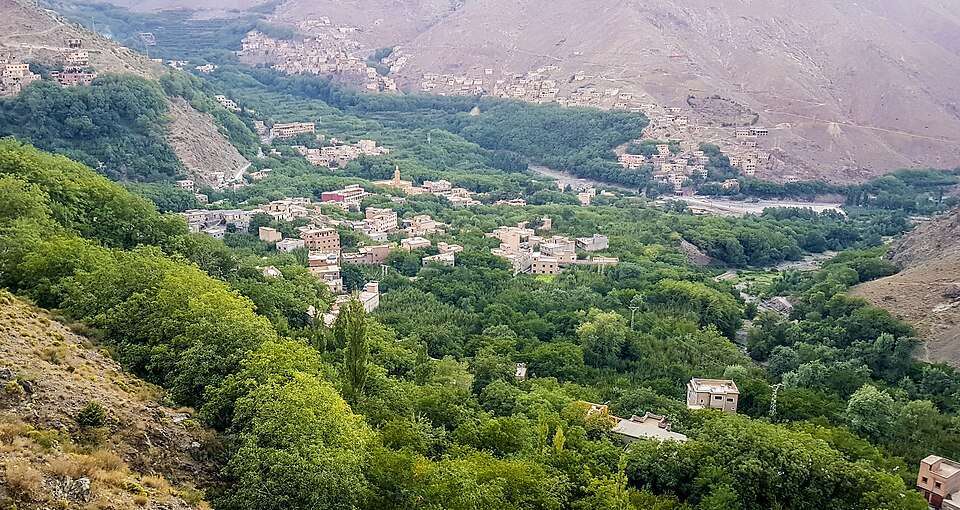
Imlil
Into the High Atlas by Grand Taxi, and How Far One Day Gets You
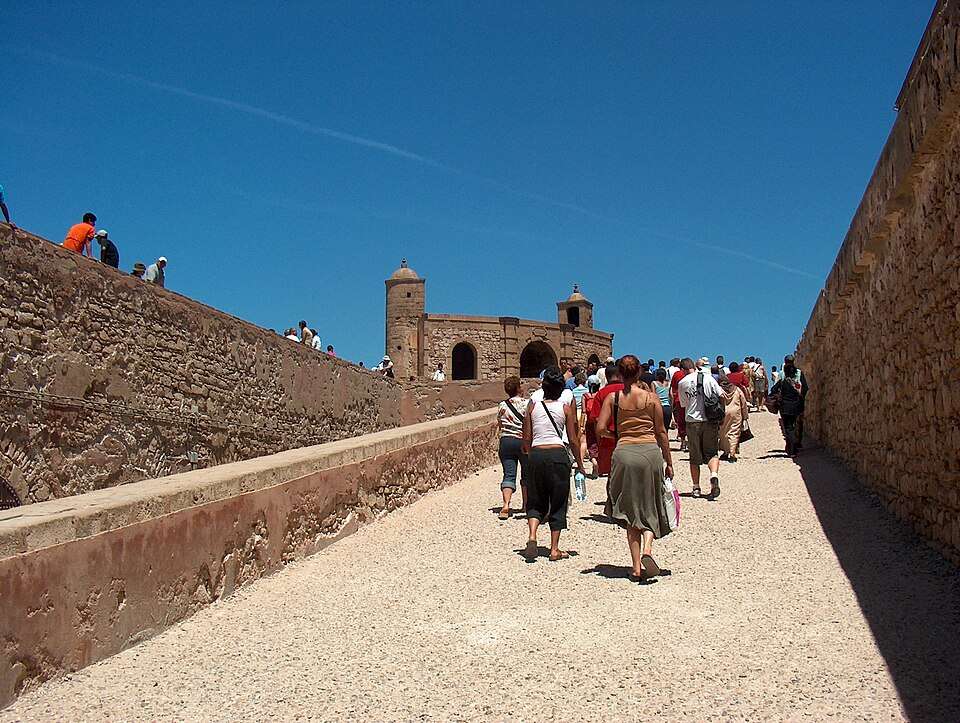
Essaouira
The Three-Hour Bus, the Blue Boats
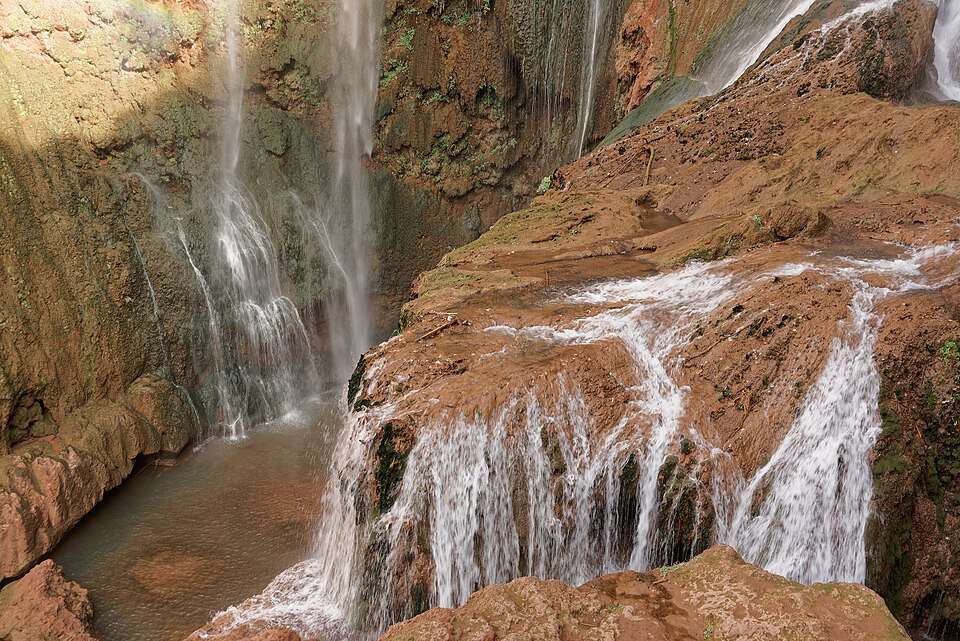
Ouzoud
The Long Road, the Wild Macaques
The High Atlas — Imlil & the Ourika Valley
The mountains start absurdly close, and the two classic valleys serve different appetites.
Imlil, ninety minutes south, is the trekking capital: a village at 1,740 meters under Mount Toubkal, North Africa’s highest peak. The day-trip version walks the valley — village paths, walnut terraces, the waterfall above Aroumd, lunch on a Berber guesthouse terrace with the peak framed behind the mint tea. Local guides and mule support hire at the trailhead economy, and hiring locally is both the better walk and the right economics. Toubkal’s summit itself is a two-day undertaking with a refuge night, and official guides are required for the ascent — it is its own trip.
The Ourika Valley, an hour southeast, is the gentler, busier answer: riverside tagine restaurants with tables in the water, the Setti Fatma village walk to the seven waterfalls — a scramble more than a stroll; the first fall satisfies most visitors — and Berber-market Mondays. One serious note: Ourika is a flash-flood valley, and after storms the river must be respected — heed local guidance in spring especially.
Both run half to full days. Imlil for walkers, Ourika for lunch-with-scenery, and either delivers snow-capped views over the palms from November through spring.
Read the full Imlil day-trip page.
Essaouira — The Wind City
Two and a half hours west, Essaouira is the exhale: an eighteenth-century fortified port where the Atlantic wind is so constant the town built an identity on it. The circuit walks itself — the Skala de la Ville ramparts with their brass cannons, the blue fishing boats and screaming gulls of the port (grilled sardines at the dockside stalls are the honest lunch), the whitewashed medina that navigates easily where Marrakech’s disorients, and the woodworkers’ souk running the thuya-wood economy.
The texture is the point: Gnawa music drifting from doorways — the festival each June is the full immersion — art galleries at fishing-town prices, and a hassle level that runs a fraction of Marrakech’s, which is half of why day-trippers exhale on arrival.
The honesty items: the wind is structural — it makes the town Africa’s kitesurfing capital and makes the wide beach better for walking and camel-silhouette photographs than for swimming. Sidi Kaouki, twenty minutes south, is the quieter beach answer. The day trip works cleanly at five hours of round-trip road; the overnight adds the evening medina that coach visitors never see. Goats do climb the argan trees en route — and know that the most photogenic roadside clusters are sometimes staged for tips, with the goats placed in the branches; the wild version happens, but photograph the roadside setups knowing what they are.
Read the full Essaouira day-trip page.
Aït Benhaddou — The Kasbah Day, Priced Honestly
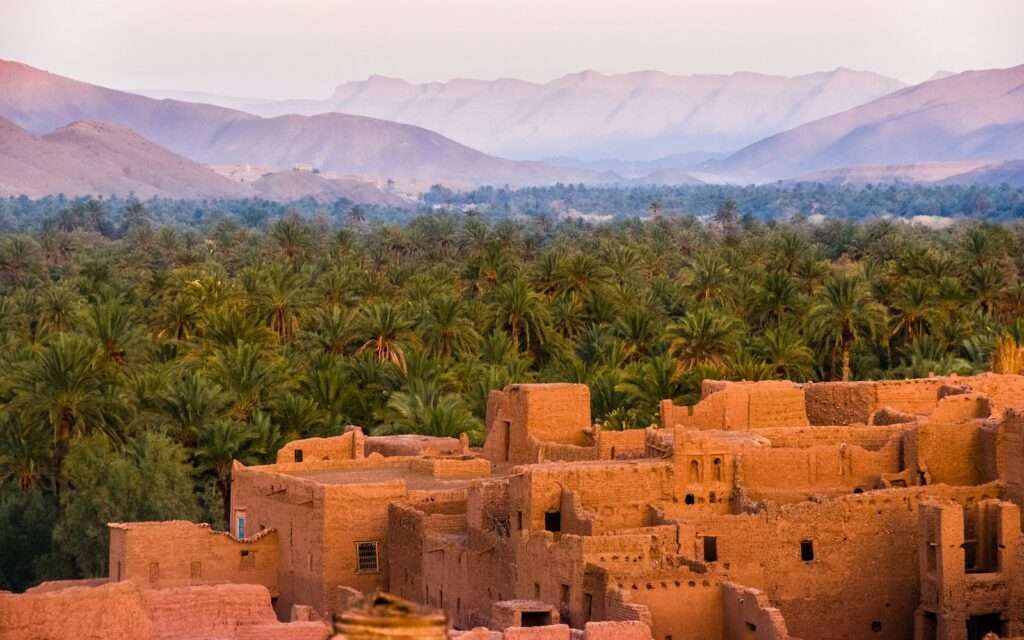
The famous ksar sits three and a half to four hours southeast, over the Tizi n’Tichka pass at 2,260 meters — which prices the day at eight to nine hours of mountain road around two to three at the site. It’s a genuinely long day, and the road itself is half the show: switchbacks, argan and walnut valleys, and the pass’s high-desert palette.
The ksar justifies the drive: a fortified mud-brick hill village on the old caravan route, UNESCO-listed, its towers and lanes so cinematically perfect that the film industry has used it for decades — Lawrence of Arabia through Gladiator to the prestige-television era, a list the local guides recite with ownership. Climb to the granary at the top for the valley view, and know a few families still live inside the walls; the visit is someone’s address.
The connoisseur’s add-on is Telouet, the crumbling Glaoui kasbah off the old pass road, where ruined mud walls hide unrestored painted salons — the decaying-grandeur counterpoint to Aït Benhaddou’s restoration. Ouarzazate’s film studios extend the day for cinema people. The verdict: worth it once, with an early start, a good driver, and the understanding that this is the region’s marathon. The overnight version, continuing into the Dades or Draa valleys, is where the real south begins.
The Desert Question — Answered Honestly
State it plainly: the Sahara of the dunes — Erg Chebbi at Merzouga, Erg Chigaga beyond Zagora — sits nine-plus hours’ drive away and is not a day trip by any honest definition. The “Marrakech desert day trip” products sold around Jemaa el-Fna deliver something else, and knowing what buys the right expectations.
What they deliver is the Agafay: a stone desert forty minutes from the city — barren, lunar, genuinely dramatic hills of packed earth and rock, with the Atlas as backdrop and no sand dunes anywhere. On its own terms it works: sunset camel or quad rides, dinner camps under real stars, the desert-dinner theater done at convenient range. Taken as a Sahara substitute it disappoints; taken as the Agafay it satisfies.
The welfare note applies to the camel economy here and at the palm-grove rides: animals in visibly good condition, water and shade at the staging areas, and operators who limit loads are the ones to book — the difference is visible at a glance.
The honest routing: travelers with two nights to spare should take the real thing — Merzouga’s dunes via an overnight circuit — and travelers without them should take the Agafay for what it is, or spend the day in the Atlas instead.
Ouzoud Falls — The Full-Day Cascade
Two and a half hours northeast, the Cascades d’Ouzoud are Morocco’s highest falls: 110 meters of red-canyon cascade, olive groves at the rim, and rainbows in the mist on sunny mornings. The circuit descends the stepped path among the cafés and rug-draped terraces, crosses below on the little raft-boats that pole visitors into the spray for a few dirhams, and climbs back the far side — an hour or two of genuine but manageable effort.
The macaques are the co-stars: Barbary apes hold the rim territory and work the crowds. Don’t feed them, hold your snacks and sunglasses close, and photograph from a respectful arm’s length — the fed ones are the bold ones, and the feeding is the problem.
The honesty items: the site runs commercial — cafés stack the canyon walls, and midday brings the coach wave, so early arrival gets the falls at their calmest. Spring delivers maximum water; late summer thins the flow. The pools below swim in the warm months for the willing. It’s a gentler day than Aït Benhaddou at similar range, and the better pick for families.
Read the full Ouzoud day-trip page.
The Majorelle Trap, the Square & Marrakech Itself
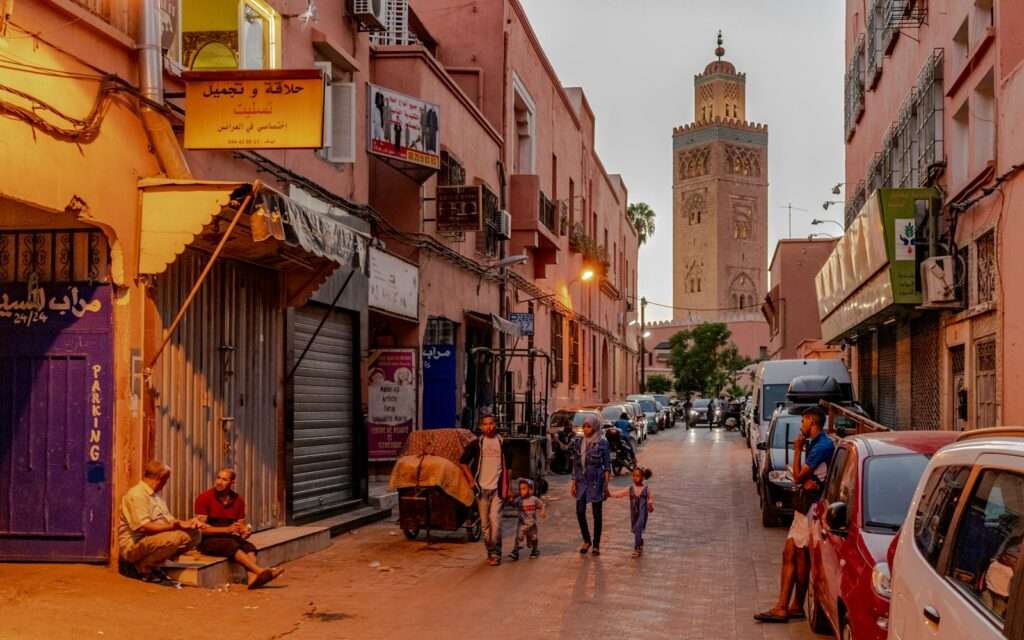
The Majorelle mechanics first, because the trap is real: the Jardin Majorelle — the cobalt-blue garden Yves Saint Laurent saved — sells timed tickets exclusively online through the official site, tickets.jardinmajorelle.com, and lookalike domains sell marked-up or invalid tickets to travelers who searched carelessly. Book the real site, choose the combined ticket if the Berber Arts museum and the YSL museum interest you, and take the 8 a.m. slot — the garden is small, the daily visitor count is enormous, and the first hour is the photogenic one. The Villa Oasis private garden closes Wednesdays.
Jemaa el-Fna, the great square, needs its calibrations: the evening food stalls are the show — eat where Moroccans cluster, confirm prices before sitting, and the orange-juice carts are the safe classic. The snake charmers and monkey handlers are an animal-welfare skip: photographs fund the practice, so the line is simple — no photos, no money. Henna artists start work on your hand uninvited — a firm no before contact is the technique — and “the tanneries are closing in ten minutes” is the city’s oldest redirect; unofficial guides who attach themselves expect payment, and a polite, repeated “la, shukran” while walking is the whole toolkit.
The rest: the Bahia Palace and the Ben Youssef Madrasa carry the architecture morning (both early, before the coaches), the Saadian Tombs add the half hour, and the souks reward getting lost on purpose — haggling is expected, opening at a third of the ask is conventional, and walking away is the strongest word in the vocabulary. The hammam question sorts by intent: neighborhood hammams for the authentic scrub at local prices, spa hammams for the robed version at ten times the rate — both legitimate, different products. March–May and October–November are the weather windows; July–August runs brutally hot with the Atlas as the escape valve; and Ramadan reshapes daily rhythms — restaurants adapt for visitors, but the evening iftar hour empties the streets and then fills them with the year’s best atmosphere.
Frequently Asked Questions
Can you do a Sahara day trip from Marrakech?
No — the real dunes at Merzouga sit nine-plus hours away and need two nights minimum. Day products deliver the Agafay stone desert, forty minutes out: genuinely dramatic, zero sand dunes. Book it knowing which desert you’re buying.
Is Aït Benhaddou worth the drive?
Once, yes — a UNESCO mud-brick ksar of film-set fame, but it’s eight to nine hours of mountain road around two or three on site. Start early, add ruined Telouet for the connoisseur’s hour, and consider the overnight continuation south.
How do you buy Jardin Majorelle tickets?
Only at tickets.jardinmajorelle.com — the official site warns that lookalike domains sell invalid or marked-up tickets. Book the 8 a.m. timed slot; the garden is small and the crowds are not.
Is Essaouira better as a day trip or overnight?
The day trip works at five round-trip road hours — ramparts, port sardines, and a medina that doesn’t hassle. The overnight adds the evening town the coaches miss. Pack a windbreaker; the wind is the town’s personality.
How should you handle Jemaa el-Fna?
Eat where locals cluster and confirm prices first, give the snake charmers and monkey handlers a hard pass on welfare grounds, and deflect self-appointed guides with a polite, repeated no while walking. The square rewards visitors who arrive calibrated.