The Ouzoud Falls
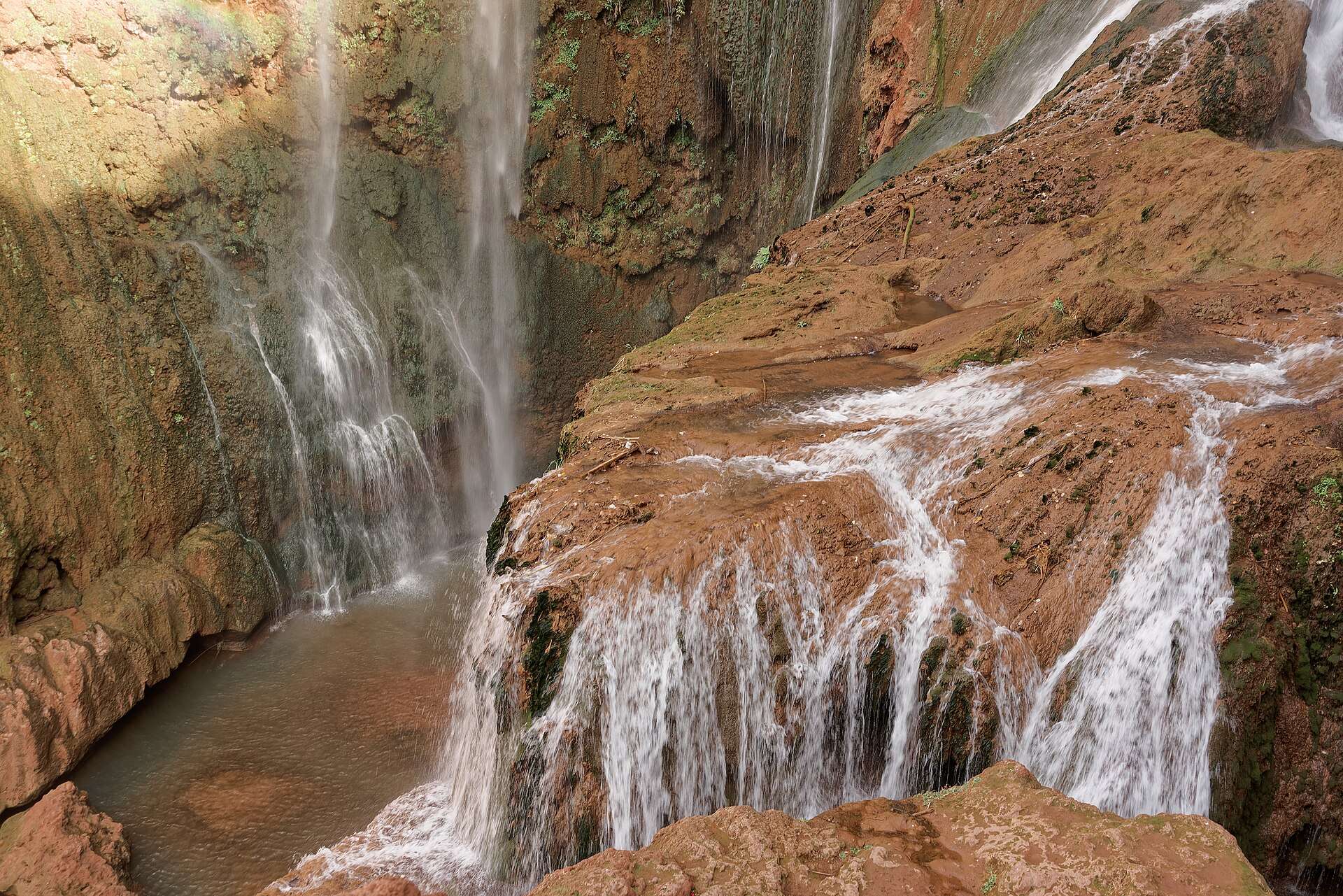
Three hours into the Atlas foothills, the Ouzoud falls drop a hundred-plus meters through olive terraces into rainbow-making mist — with wild macaques working the path and a raft waiting at the bottom.
The short version
- Ouzoud sits about 150 km northeast in the Middle Atlas foothills — organized day trips run the round trip at low package prices and remove the mountain-road driving, which is the alarm’s standing conclusion; intercity coaches toward Azilal serve the independent-minded via ctm.ma with a local connection.
- The falls drop in tiers over a hundred meters — among North Africa’s highest — with the flow at its fullest in spring snowmelt and the mist manufacturing rainbows on sunny afternoons, per the alarm’s timing.
- Barbary macaques live wild along the path and have learned exactly what daypacks contain — the feed-nothing, zip-everything rule protects both parties, and the monkeys photograph best at the distance they choose.
- The stepped path descends through olive groves and café terraces to the plunge pools — steep enough down, honest work back up, with mint-tea stops built into the topography.
- Small rafts pole visitors across the base pool to the spray line for a modest fee — brief, cheerful, and the closest view of the falls’ full height.
- The olive terraces are the place’s other economy — Ouzoud’s name traces to the olive in the local Amazigh usage, the groves frame every view, and the terrace tagines cook slowly enough to order before your descent.

Getting there
The tour vans leave Marrakech early, cross the Tadla plains, and climb into the foothills with a mint-tea stop en route — the package price typically undercuts a rental car’s fuel, and the guide handles the trailhead’s cheerful commission ecosystem. Self-drivers gain schedule freedom and the road’s viewpoints at the cost of three hours each way of attention; the CTM-plus-local-taxi assembly serves budget independence with patience. Whatever the mode, the day’s shape is fixed: arrive late morning, descend, long lunch, rainbow hours, climb, return by dark.
The visit
Take the rim viewpoints first — the full tiered drop composes best from the top terraces — then the descent: stepped, shaded in stretches, macaque-patrolled per the alarm’s zipped-bag law. The base repays the knees: plunge-pool breeze, the raft’s few minutes into the spray, and the falls at their full height from water level. Lunch climbs one terrace up — tagine ordered on the way down and ready on the way back is the local system working as designed. The afternoon’s angle brings the rainbows: mid-to-late afternoon sun through the mist, banked from the terraces per the alarm’s timing. The climb out runs slower than the descent and justifies the second mint tea; swimmers judge the lower pools by the day’s flow and the locals’ example. The van home crosses the plains at dusk.
When to go
March through June carries the snowmelt flow — the falls at full width and the groves green. Summer runs hot with the falls slimmer but the pools busiest with Moroccan families, which is its own good scene; the shade and mist beat Marrakech’s furnace by ten degrees. Autumn is amber and quieter; winter thins the flow and the crowds together, with clear-day visits still paying. The rainbows follow sun-plus-mist arithmetic year-round — afternoon is the reliable window whenever the sky cooperates.
Frequently Asked Questions
How aggressive are the macaques really?
Opportunistic rather than hostile — they snatch visible food, open loose zips, and lose interest in sealed bags immediately. Hold nothing edible, keep phones gripped during close approaches, and the encounter stays on photogenic terms. Feeding them harms the troop and escalates the snatching; the rule protects everyone.
Is the path manageable for all ages?
It’s a steep stepped descent with rails in stretches — sturdy shoes and unhurried pace carry most visitors including children; the climb back is the real measure. Terraces break the ascent naturally, and mules informally serve the truly spent on busy days.
Can I swim at the falls?
The lower pools see swimmers in the warm months — cold, current-bearing water judged by the day’s flow and the locals’ example, per the standing rule. The raft covers the close-up for non-swimmers; nobody swims under the main drop itself.
Ouzoud or Imlil for the Marrakech mountain day?
Imlil (documented on this network) is the High Atlas village-and-valley walking day; Ouzoud is the waterfall spectacle with easier legs. Hikers choose Imlil, families and photographers Ouzoud — and the two together bracket the Atlas nicely across a week.
What should I bring?
Water, sun cover, grippy shoes, and small cash for the raft, teas, and facilities — plus the zipped daypack the alarm already assigned. Swimwear in the warm months; a dry layer for the spray line. Everything else the terraces sell.