The Road to Aït Ben Haddou
Over the High Atlas to a thousand-year-old earthen city that Hollywood keeps borrowing — the long day that explains southern Morocco.
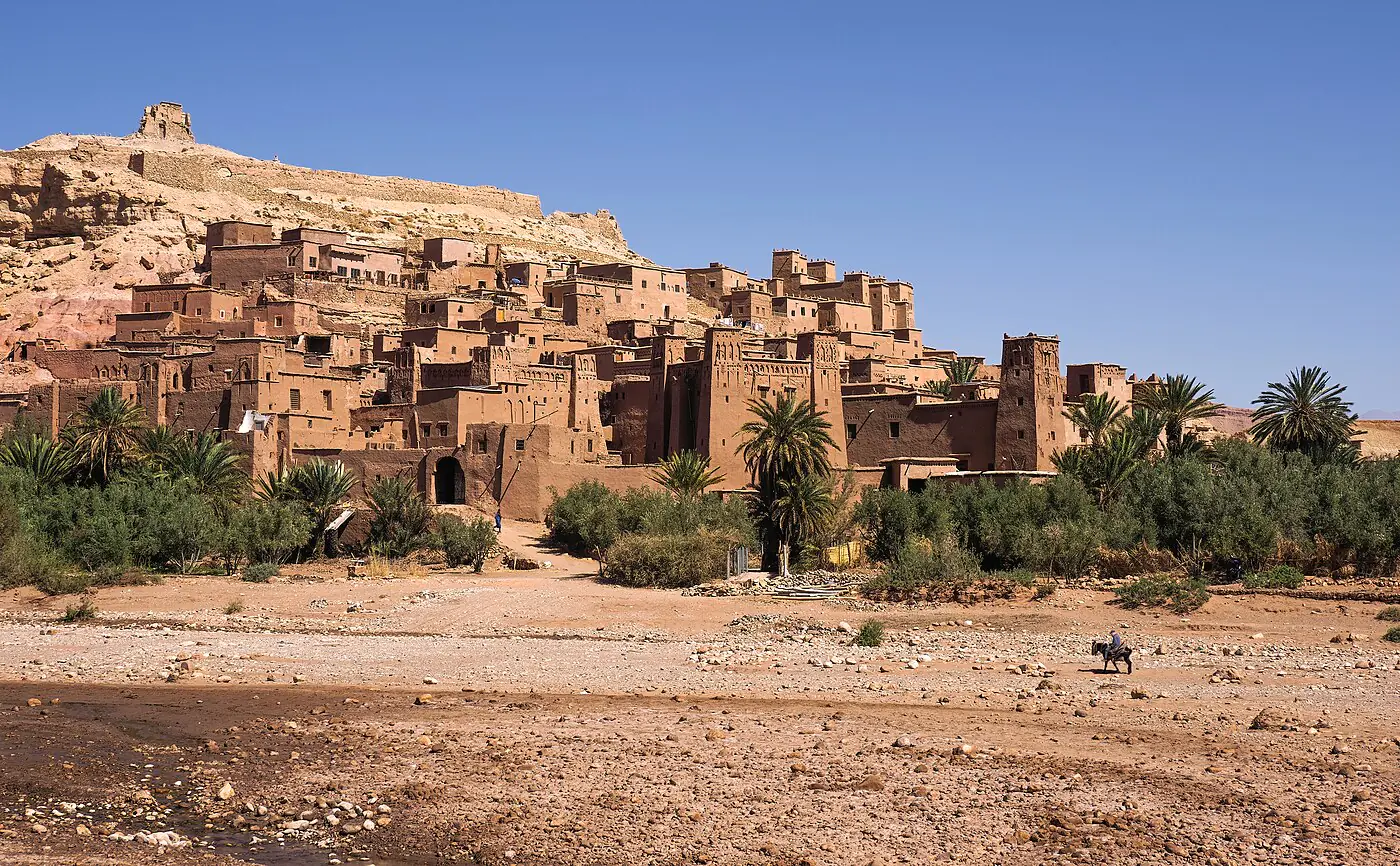
The short version
- The honest math first: Aït Ben Haddou lies about 185 kilometres southeast, and the Tizi n’Tichka pass — 2,260 metres of switchbacks across the High Atlas — makes that four hours each way. The day trip is real and long; travelers with a spare night sleep in the valley or Ouarzazate and meet the ksar at dawn.
- The ksar is the country’s most famous earthen village — fortified clan houses of rammed earth and straw stacked up a hillside above the Ounila river, crowned by the collective granary, UNESCO-listed since 1987 — background at whc.unesco.org.
- A handful of families still live inside the walls, re-plastering their houses with the same earth after every rain season — the maintenance IS the monument — while most residents moved to the modern village across the riverbed, where the day’s bread gets baked.
- The film résumé runs from Lawrence of Arabia through Gladiator to the fantasy-series era, and the ksar wears it lightly: a few painted doors from old sets, guides with casting stories, and Atlas Studios down the road in Ouarzazate for the full backlot pilgrimage.
- The climb to the granary takes twenty minutes through kasbah lanes and frames the whole valley — palmery, riverbed, and the Atlas wall you crossed — best in the low light the day-trip schedule biologically denies you, which is the overnight argument in one sentence.

Getting there
Shared day tours and private drivers leave Marrakech at dawn, cross the Tizi n’Tichka in about four hours with viewpoint and coffee stops, and allow two to three hours at the ksar before the return — a 12-to-13-hour door-to-door day. Self-driving works for confident mountain drivers; the N9 is paved and dramatic the whole way. Many itineraries add Ouarzazate’s Atlas Studios or the Ounila valley’s Telouet kasbah — worthwhile both, each costing time the daylight has to pay for.
The day
Dawn departure, the Atlas doing its slow reveal, and the pass’s summit stalls selling fossils and mint tea at the top of the world. Descend into the pre-Sahara’s light — the geology turns Mars-colored on schedule — and reach the ksar by late morning. Cross the riverbed on the stepping stones or the footbridge, then climb: lanes between rammed-earth towers, carved doorways, house museums pouring tea, and the granary’s summit panorama over palmery and desert rim. Lunch across the river with the ksar filling the window, one last look as the light angles, and the long ride home — the pass at sunset forgiving the hour it costs.
When to go
October through April — clear passes, warm valley days, cold desert mornings worth a layer. High summer pushes the valley past 40°C and makes the midday climb a penance; winter occasionally snows the Tichka shut for hours, so check conditions in season. The ksar photographs best at dawn and dusk, which the day trip cannot reach — the recurring case for the Ouarzazate overnight.
Frequently Asked Questions
Can you do Aït Ben Haddou in a day from Marrakech?
Yes — four hours each way over the Tizi n’Tichka with two to three hours at the ksar makes a 12-hour day. It is the region’s standard long day trip; the overnight version adds the dawn and dusk light that make the famous photographs.
What is a ksar exactly?
A fortified village of attached earthen houses — here, clan kasbahs of rammed earth and straw stacked above the river, defended as one unit, with a collective granary at the top. Aït Ben Haddou is the best-preserved ksar on the old Sahara caravan route.
Do people still live inside?
A few families do, maintaining their houses with fresh earth plaster each year — the living upkeep is why the place still stands. Most of the village long since moved across the river, where the guesthouses and restaurants cluster.
Which films were shot here?
Lawrence of Arabia, Jesus of Nazareth, The Mummy, Gladiator, and the big fantasy-series productions among dozens — Ouarzazate’s Atlas Studios nearby industrialized the business. The ksar predates them all by roughly nine centuries and will outlast the franchises.
Is the Tizi n’Tichka drive difficult?
It is a well-paved national road of relentless switchbacks shared with trucks — spectacular, slow, and occasionally fog- or snow-affected in winter. Leave early, stop at the viewpoints, and medicate the motion-sick preemptively.