Essaouira on the Atlantic
Three hours west of Marrakech, the Atlantic runs a different Morocco: a walled white-and-blue port where the wind works full time, the sardines come off the boats grilling-fresh, and the pace drops by half.
The short version
- Supratours and CTM run reserved-seat coaches from Marrakech in about three hours each way — book the return when you book the outbound, especially Sundays; CTM schedules at ctm.ma.
- Essaouira’s 18th-century medina — UNESCO-listed, sea-walled, and laid out on a grid by a European engineer for a sultan — walks in an hour and repays three: workshops of thuya wood, silver souks, and blue doors doing steady modeling work.
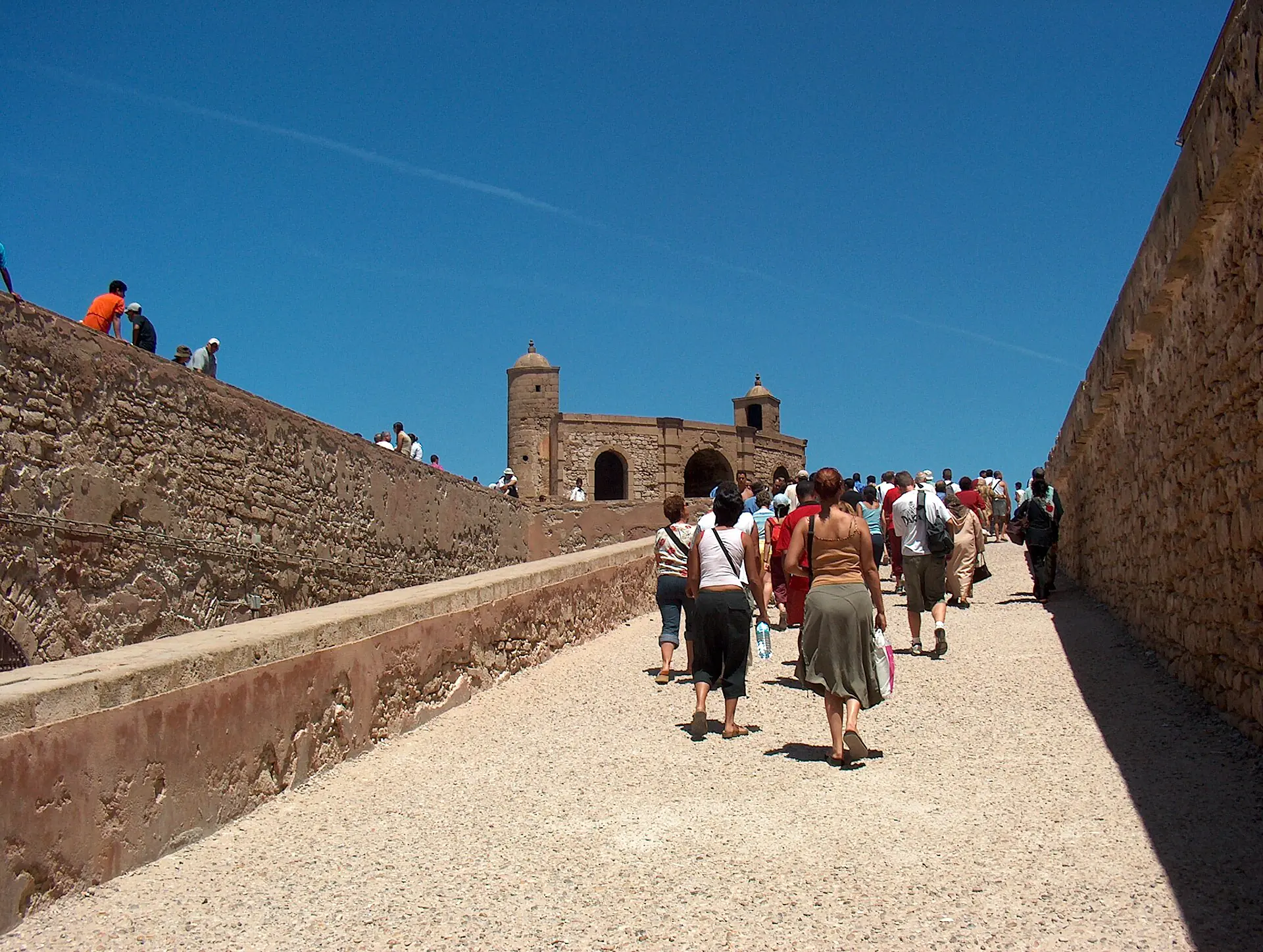
- The Skala de la Ville ramparts mount brass cannons over the Atlantic — the sea bastion’s walk is free, wave-sprayed in a blow, and familiar to Game of Thrones viewers as Astapor.
- The port is the town’s engine: blue boats unloading, gulls auditing, and the grill stalls between port and square turning the morning’s sardines into the lunch the alarm already ordered.
- The trade winds — the alizés — make the bay a wind-sport capital and the beach a walking-not-lounging proposition most afternoons; the long strand toward the dunes suits exactly that.
- Gnaoua music is the town’s soundtrack and June’s festival its loudest week; argan cooperatives line the road from Marrakech, with the real ones happy to show the pressing.

Getting there
The reserved coach is the answer: Supratours and CTM both run the corridor several times daily from their Marrakech terminals, three hours through argan country — where the goats-in-trees photo stop is the route’s running gag — to stations at the medina’s edge. Book both legs upfront, per the alarm; the late-afternoon returns carry everyone who had your same idea. Grands taxis and private drivers compress the schedule for a price; the bus does the standard day honestly.
The day
Walk in through Bab Doukkala and let the grid do what Moroccan medinas usually refuse: orient you. The Skala’s cannon line first, with the Atlantic performing against the walls, then the thuya workshops and the silver lanes at browsing pace — the hustle here runs at half Marrakech volume, which becomes its own vacation. The port before lunch: boats, nets, the fish auction’s theater, and then the grill stalls’ sardine ritual — pointed at, weighed, grilled, and eaten with bread and salad at a shared table. The afternoon takes the beach walk into the wind toward the dune end, a rooftop café’s mint tea above the ramparts, or Orson Welles Square for the town’s film-history footnote (his Othello opened here, shot in these lanes). The evening bus rolls east with the light behind it.
When to go
The town runs temperate year-round — the Atlantic thermostat holds it cooler than Marrakech in summer and milder in winter, with the wind as the constant the alarm dressed you for. Spring and autumn balance best; July–August brings Moroccan holiday crowds and the Gnaoua festival’s June surge books everything with a bed. Winter’s emptier lanes and dramatic seas suit the walkers and photographers. The wind drops most reliably in the mornings — the beach’s gentle hours — and builds by afternoon into the kitesurfers’ shift.
Frequently Asked Questions
Is three hours each way worth it for a day?
For the contrast, yes — Essaouira is the exhale after Marrakech’s inhale, and the day version delivers the essential town. It’s also the network’s clearest overnight-upgrade candidate: the medina after the day buses leave is a different, better century.
Are the sardines really the move?
The port grills are the town’s institution — fresh off the boats, priced by weight, eaten elbow to elbow. Confirm the price before grilling and the ritual runs smooth. The fancier fish restaurants exist for the second visit.
What about the goats in the argan trees?
Real phenomenon, partially staged for the road’s photo stops — the goats do climb, and some roadside operators help them schedule it. The cooperatives’ pressing demonstrations are the more honest argan encounter.
Is the beach worth planning around?
As a walk, a wind-sport arena, and a sunset stage: yes. As a lounging beach: mornings only, before the alizés clock in. Agadir exists for the towel-based vacation; Essaouira does something better.
Marrakech day trip or Atlas mountains instead?
Different products: Imlil’s valleys for the mountain day (documented on this network), Essaouira for the coast and the pace change. With two spare days, both; with one, the coast wins in summer heat and the mountains in spring.